


Date:
16 Nov 2026
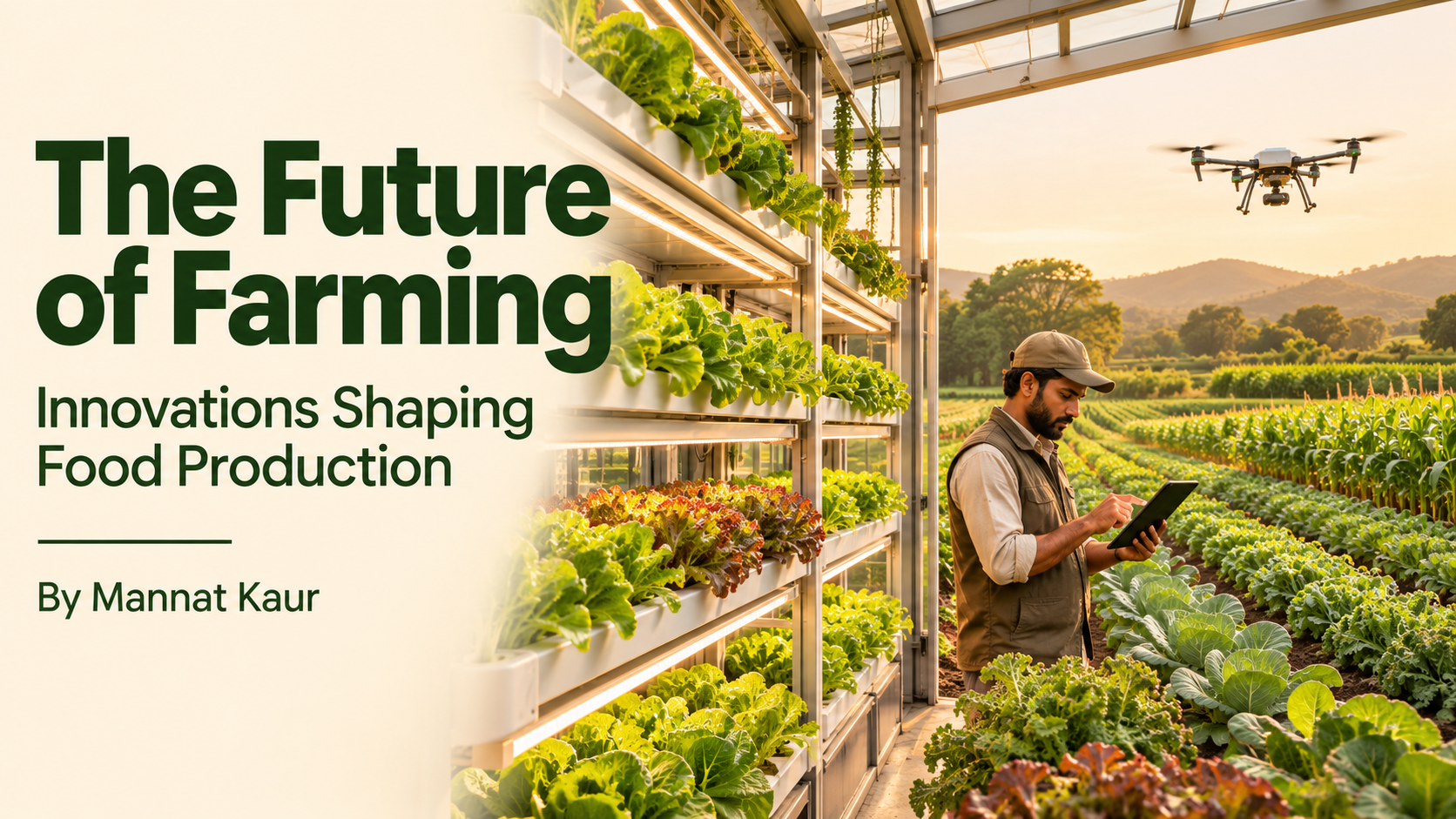
With climate change, population growth and resource depletion, agriculture is undergoing a major transformation. To meet future demands sustainably, farmers, scientists, and technology experts are developing innovative farming techniques that boost productivity and minimize environmental impact. This article explores some of the most promising advancements shaping the future of food production.
- Vertical Farming: Growing Up, Not Out
Vertical farming involves growing crops in stacked layers inside controlled environments such as warehouses and greenhouses
Key benefits:
- Uses 90% less water than traditional farming.
- Allows food production in cities, reducing transport emissions.
- Can grow crops year-round, unaffected by climate conditions.
- Hydroponics and Aquaponics: Farming Without Soil
Hydroponics: Growing Crops in Water
- Plants are grown in nutrient-rich water, eliminating the need for soil.
- Uses 90% less water than conventional farming.
- Enables indoor farming in areas with poor soil conditions.
Aquaponics: A Closed-Loop System
- Combines fish farming (aquaculture) with hydroponics.
- Fish waste provides natural fertilizer for plants, while plants filter the water for fish.
- Produces both fresh vegetables and fish in a sustainable way.
- Aeroponics: Farming with Air and Mist
- Plants grow without soil or water, with roots suspended in the air.
- Nutrients are delivered as a fine mist, reducing water usage by 95%.
- Faster plant growth due to increased oxygen exposure to roots.
Key benefits:
- Ideal for space farming and harsh environments.
- Can be used for high-density urban farming.
- Regenerative Agriculture: Healing the Soil
- Regenerative farming focuses on restoring soil health and biodiversity by using:
- Cover crops to enrich soil nutrients.
- No-till farming to retain moisture and reduce erosion.
- Rotational grazing to prevent overgrazing and rebuild soil fertility.
- Why It’s the Future:
- Improves soil quality and water retention.
- Helps combat climate change by capturing carbon in the soil.
- Reduces the need for chemical fertilizers and pesticides.
- Smart Farming: AI, Drones, and Automation
- How Technology is Changing Farming:
- AI and big data help farmers analyse soil conditions, weather, and crop health.
- Drones are used for planting, monitoring fields, and applying fertilizers with precision.
- Autonomous tractors and robotic harvesters are reducing labour costs and increasing efficiency.
- Why It’s Important:
- Reduces waste and inefficiency in farming.
- Helps small farmers compete with industrial agriculture.
- Increases food production with minimal environmental impact.
By Mannat Kaur
Contact no -7973833099